

Warm White vs Cool White Bulbs: A Beginner's Guide for UK Homes

Two bulbs can look identical on the shelf and produce two entirely different rooms. One turns a hallway into something calm and considered; the other makes the same hallway feel like a corridor in an office block. The difference is colour temperature — how warm or cool the light itself is — and it shapes how a home feels more than most of us expect. It is not purely a matter of taste, either. There are practical rules, and once you know them you can pick a bulb with confidence rather than guesswork.
What colour temperature actually means
Colour temperature describes the tint of white light and is measured in kelvins, written as K. The scale runs in a way that catches people out: the higher the number, the cooler the light. A bulb rated 2700K gives a soft amber glow similar to an old filament lamp. A 6000K bulb looks closer to a bright overcast sky.
Kelvins say nothing about brightness. Brightness is measured in lumens, and the two are completely separate. You can buy a dim 6500K bulb and a fiercely bright 2700K one. If a light feels harsh, check the kelvin rating before assuming it is simply too bright.
In UK fittings — bayonet B22, screw E27 and GU10 spots — you will usually see four bands.
- 2200K–2400K: very warm, candle-like amber. Suits decorative lamps and outdoor lanterns.
- 2700K–3000K: warm white. The default for living rooms and bedrooms.
- 3500K–4100K: neutral to cool white. Crisp, with little yellow or blue in it.
- 5000K–6500K: daylight or cool daylight. Clean and blue-toned.
Warm white: for rooms where you want to switch off
Warm white between 2700K and 3000K is closest to the incandescent bulbs most UK homes were built around, so it rarely looks wrong. Living rooms, bedrooms, dining rooms and reading corners all sit comfortably here. It flatters wood, warm paint colours and fabric, and it keeps skin tones looking natural rather than grey.
Warm temperatures also work better at lower light levels. A 2700K bulb on a dimmer, or spread across three table lamps instead of one ceiling pendant, gives the layered glow that makes a room feel lived in. If you are replacing a single bulb in a room that already feels right, start here.
Neutral white: the quiet middle ground
Between roughly 3500K and 4100K you get neutral white, sometimes sold as cool white. It is the practical middle: bright enough to see detail, warm enough not to feel clinical. Hallways, landings, stairwells, utility rooms and open-plan kitchens tend to suit it, particularly where one space has to handle cooking, homework and eating.
If your kitchen has a dining table at one end, neutral white overhead plus a warm white pendant above the table is a good compromise. The work zone stays clear; the eating zone stays soft.
Cool white and daylight: clarity, not comfort
At 4000K and above, light takes on a blue cast. That is not a fault — it is useful. Cooler light makes fine detail easier to read, edges look sharper and colours appear cleaner. Kitchens, bathrooms, garages, workshops, laundry rooms and home offices all benefit from it.
Where it goes wrong is in the evening, in rooms where you relax. A 6000K ceiling light in a living room flattens soft furnishings and can feel alerting late at night. Some people find bright, blue-rich light in the evening uncomfortable, so if you are sensitive to light or concerned about your sleep, speak to a GP rather than working it out alone.
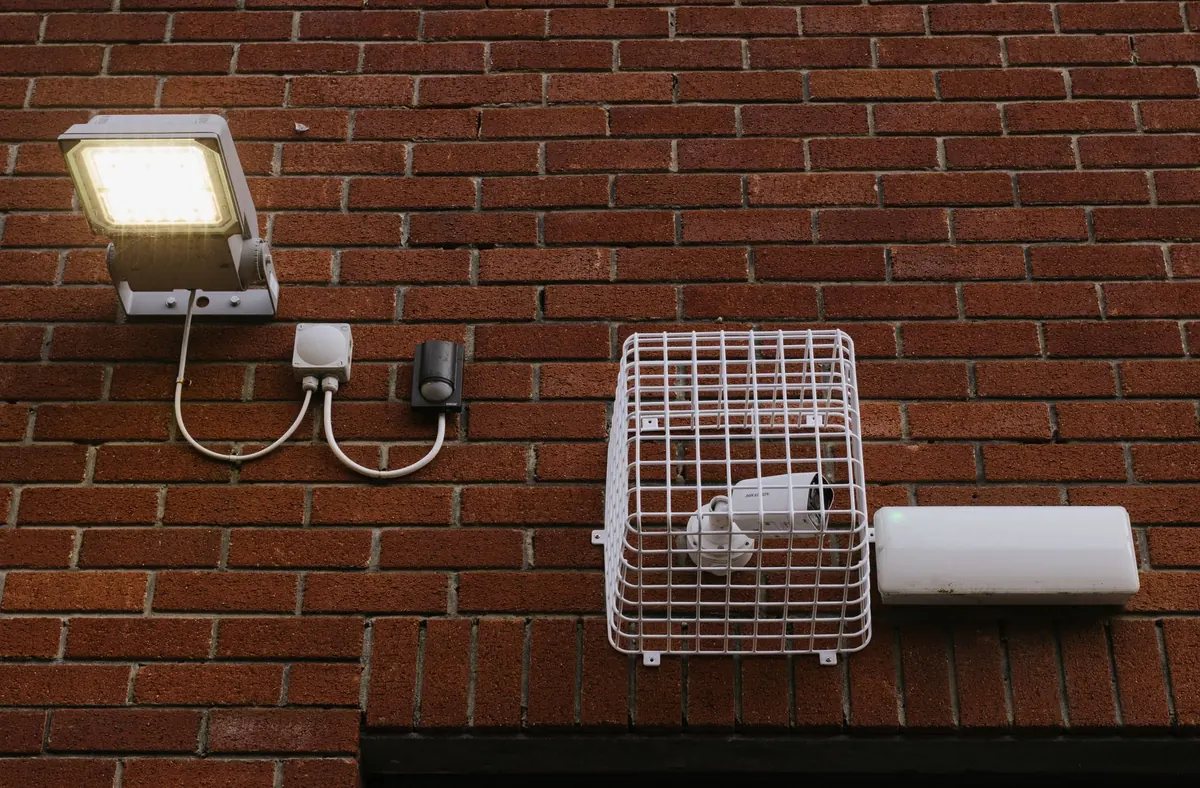
Daylight bulbs also have a place outdoors: porch lights, security lights and garage exteriors, where a crisp white beam reads as practical rather than cosy.
A room-by-room starting point
- Living room: 2700K, ideally dimmable and spread across several lamps.
- Bedroom: 2700K. Bedside lamps matter more here than the ceiling light.
- Kitchen: 4000K for work surfaces and task lighting, 2700K over a dining table.
- Bathroom: 4000K around the mirror, where you want to see clearly.
- Hallway and stairs: 3500K–4000K, so the space feels bright and safe.
- Home office: 4000K for daytime focus, with a warm lamp for the evening.
- Garage, utility, workshop: 5000K–6000K for detail work.
The mixing mistake that looks like a fault
Bulbs of different temperatures in the same room rarely look deliberate. Put a 2700K and a 4000K side by side and one looks yellow while the other looks blue. Your eye reads that as a broken light, not a design choice. Replace bulbs in pairs, and if a fitting takes several, replace the lot.
Rule of thumb: if two bulbs disagree in the same sight line, one of them is wrong for that room.
Two things worth knowing. First, an open-plan space counts as one room — check that kitchen spots and living room lamps are not fighting each other. Second, some LED bulbs shift warmer as you dim them, sold as dim-to-warm, so a 3000K bulb might drop to around 2000K at low output. That is often exactly what you want in an evening room.
Getting it right without guessing
What to read on the box
- Kelvins — the warmth or coolness.
- Lumens — the actual brightness. Treat the "watts equivalent" as a rough guide only.
- CRI — colour rendering. Around 80 is fine for most rooms; 90 or above is worth paying for near mirrors, artwork or anywhere you judge colour.
- Dimmable? — not all LEDs are, and dimming an incompatible bulb can cause flicker or buzzing.
- Fitting and shape — B22, E27 or GU10, and whether you need a candle, golf ball or spotlight.
Buy one bulb first and live with it for an evening before committing to a whole room. Test it after dark with the curtains closed, since daylight from a window will make any bulb look cooler than it does at night. If it feels slightly too yellow or too blue, that is useful information, and a single bulb is far cheaper than six. Keep the receipt.
Most households settle on 2700K for the rooms they relax in and 4000K for the rooms they work in, then leave the rest alone. Once you have that baseline, choosing a bulb stops being a gamble and becomes a decision you can make in seconds.
Photo: Pexels / Pixabay