
How to Choose the Right Bulb Fitting: B22, E27, GU10 and More
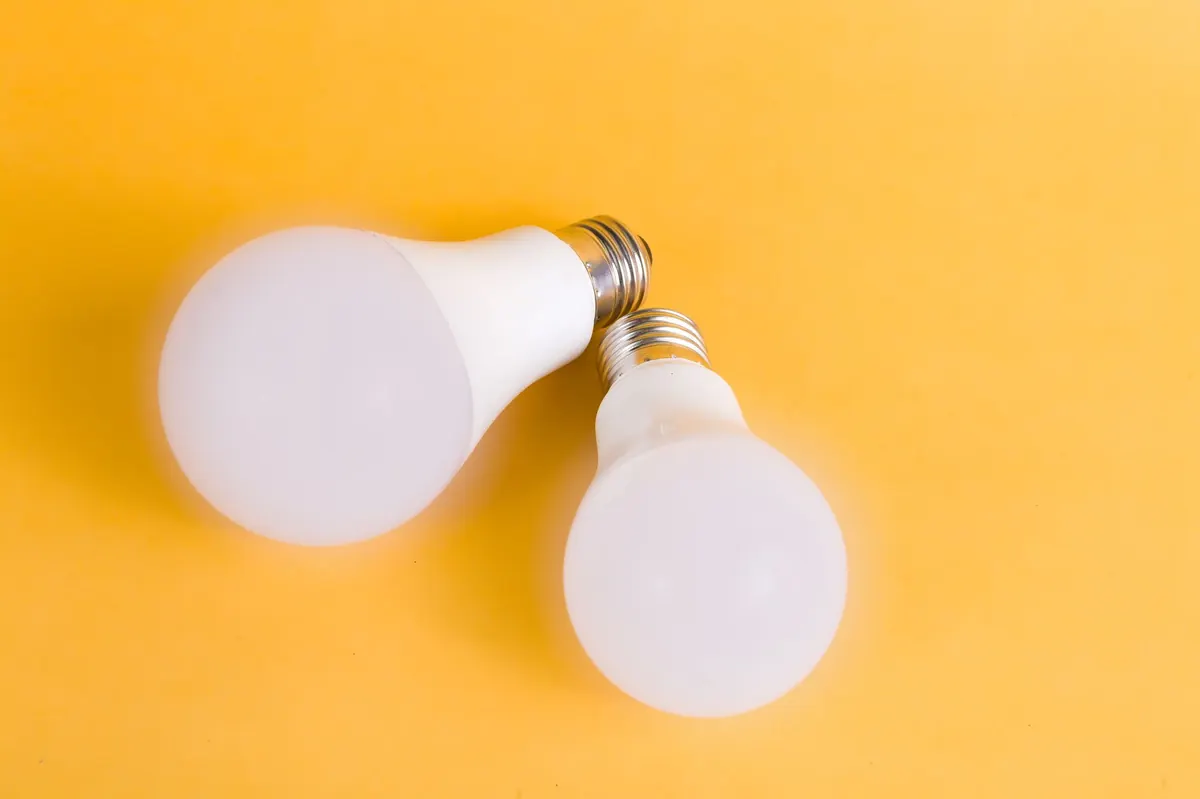
You are standing in the aisle with a dead bulb in one hand and a shelf of lookalikes in front of you. Some have pins, some have screws, and the numbers on the boxes mean nothing yet. The good news is that bulb fittings are less complicated than they look. Once you know the handful of common UK bases and caps, choosing a replacement takes seconds rather than a whole shopping trip.
The two main families: bayonet and screw
Most household bulbs in the UK fall into one of two groups: bayonet cap (BC) and Edison screw (ES). Bayonet bulbs have two small pins on the side of the cap. You push them into the socket and twist clockwise until they click. Screw bulbs have a spiral metal thread and simply wind in like a jar lid.
The letter and number tell you the width. B22 is a standard bayonet cap, about 22 mm across. E27 is a standard Edison screw, about 27 mm. Smaller versions exist for bedside lamps, wall lights and decorative fittings: B15 is a small bayonet cap, while E14 is a small Edison screw, often labelled SES. If the old bulb is still intact, compare it side by side with the new one. If it has crumbled or you have already binned it, take a photo of the empty socket before you go shopping.
- B22 — bayonet cap, 22 mm. Common in ceiling roses, pendant lights and many table lamps.
- E27 — Edison screw, 27 mm. Common in floor lamps, pendants and larger shades.
- B15 — small bayonet cap, 15 mm. Often used in smaller decorative fittings and some wall lights.
- E14 — small Edison screw, 14 mm. Common in candle bulbs, chandeliers and bedside lamps.
Pin fittings: GU10, GU5.3, G9 and G4
Not every bulb twists or screws in. Some push straight into a socket, or twist into a recessed holder. These are usually spotlights, downlights and small decorative lamps. The names are based on the distance between the pins, measured in millimetres.
GU10 is the one most people meet first. It has two chunky pins about 10 mm apart and a twist-lock action: push in, turn a quarter-turn, and it locks. GU10 bulbs are usually designed for mains voltage, which in the UK is around 230 V. They are common in kitchens, bathrooms and track lighting.
GU5.3 is a different beast. It also has two pins, but they are much thinner and about 5.3 mm apart. You will often see these bulbs described as MR16. Many run on 12 V and need a transformer or driver. A GU5.3 bulb will not fit a GU10 socket, and forcing it can damage the holder. If you are replacing an old low-voltage spotlight with LED, check whether the existing transformer is compatible; some older transformers need to be swapped for an LED driver.
Other fittings worth knowing include G9, a small bulb with two looped pins about 9 mm apart, often found in cooker hoods, display cabinets and compact wall lights. G4 has even smaller pins and is usually low voltage, common in cabinet and under-shelf lighting. There is also the linear R7s bulb, a long tube used in some floor lamps and security lights. With any pin fitting, never force it. If it does not seat with gentle pressure, it is the wrong type or the pins are misaligned.
How to match a bulb to your fixture
Once you know the fitting name, there are a few more checks that save return trips. The cap is only half the story; voltage, size and dimming matter just as much.
- Check the cap or base. Look at the old bulb or socket. Count pins, look for threads, and measure across the widest part if you are unsure.
- Check the voltage. Mains fittings in the UK usually take 230 V bulbs. Low-voltage fittings may use 12 V. The wrong voltage can destroy the bulb or overheat the fitting.
- Check the dimensions. A replacement may have the right cap but be too long or too wide for the shade. This matters for candle bulbs, globe bulbs and anything inside a small glass shade.
- Check the wattage or lumen output. Do not exceed the maximum wattage printed on the fitting. With LED bulbs, use lumens as your guide rather than watts.
- Check dimming. If the light is on a dimmer switch, choose a dimmable bulb. Not all LED bulbs dim smoothly, and some dimmers need a minimum load to work properly.
More than the cap: lumens, colour and beam angle
A bulb can fit perfectly and still feel wrong. Old incandescent and halogen bulbs were sold by wattage, but LED bulbs use far less power for the same brightness. As a rough guide, an old 40 W bulb gave around 400 to 450 lumens, a 60 W bulb around 700 to 800 lumens, and a 100 W bulb around 1300 to 1500 lumens. When you switch to LED, look for the lumen figure that matches the brightness you liked before.
Colour temperature is measured in kelvin. Warm white, around 2700 K, feels cosy and is the closest to traditional household lighting. Cool white, around 4000 K, is crisper and often used in kitchens, garages and workspaces. Daylight, around 6000 K, is very blue-white and can feel stark indoors, though it suits some utility areas. For spotlights, beam angle also matters: a narrow beam creates pools of light, while a wide beam gives softer, more even coverage.
If a bulb fits but the voltage, dimmer or beam angle is wrong, it is still the wrong bulb. Fit is only the first check.
Downlights, dimmers and enclosed fittings
Some situations need extra care. GU10 downlights in a bathroom should be suitable for the zone they are in, which usually means checking the IP rating. In ceilings that act as a fire barrier, fire-rated downlights may be required. If you are unsure, ask a qualified electrician rather than guessing.
Enclosed fittings, such as glass shades or sealed bulkhead lights, trap heat. Not every LED bulb is designed for that. Look for wording such as “suitable for enclosed fittings” on the packaging. If a fitting has an integrated LED, the bulb is not replaceable at all; when it fails, the whole fitting usually needs replacing.
Dimmers deserve their own mention. An LED bulb that is not marked dimmable may flicker, buzz or fail early. Even a dimmable bulb can behave badly on an old dimmer designed for halogen. If the dimming is uneven or the light buzzes, the dimmer and bulb are not compatible. A qualified electrician can advise on the right switch or driver.
A simple routine for next time
Before you buy a replacement, take the old bulb with you if you can. If it is broken, photograph the socket, note the fitting name if it is printed nearby, and write down the voltage and maximum wattage from the label. Then choose a bulb with the same cap, the right voltage, a suitable brightness in lumens, and a colour temperature that suits the room. For dimmers and enclosed fittings, check the packaging for the relevant words before you pay.
Keep a note of the fittings in your home, room by room. It takes five minutes and saves a lot of squinting at tiny pins in a shop aisle. B22 in the hallway, GU10 in the kitchen, E14 in the bedside lamps — once it is written down, the next dead bulb is a quick swap rather than a puzzle.
Photo: Riki Risnandar / Pexels